


The SUNRISE project has officially come to an end, closing a demanding but impactful chapter for everyone involved. Launched during the COVID-19 pandemic, SUNRISE addressed a hard truth: pandemics are not only health crises - they put enormous pressure on critical infrastructures (CIs) and, in turn, on society.
It soon became clear that pandemics are just one type of unforeseen threat. As a result, the project broadened its focus to include other risks, such as climate change and environmental events, recognizing that resilience must address a wide range of potential crises.
SUNRISE brought together a strong mix of real-world experience, academic expertise, and policy insight. Critical infrastructure operators, researchers, and policymakers from across Europe worked toward a shared goal: improving the resilience of vital services during unforeseen events through collaboration, practical tools, and real-world testing.
SUNRISE: a practical, end-user driven approach
The project was built around a clear set of goals, focusing on practical outcomes and real-world use:
- identifying pandemic-specific vital services and critical infrastructures, their dependencies, risks, and cascading effects,
- developing a comprehensive resilience strategy and four innovative tools tailored to pandemic conditions,
- testing these tools in real operational environments,
- promoting collaboration and shared learning across Europe to build a united front against future pandemics.
Pivoting (or better said, enlarging the scope) to the resilience against unforeseen events, it became critical for the researchers, technology providers and policy makers to maintain close engagement with CI operators. Workshops in Slovenia, Spain, and Italy created space for operators to share challenges, best practices, and expectations across epidemiological, climate, and threat scenarios. These discussions showed that while operators are well prepared for known risks, they are often not ready for the “unthinkable.”
These workshops directly informed the development of SUNRISE strategies and four innovative tools, each addressing a specific challenge faced by critical infrastructure operators:
- Risk-Based Access Control Solution (RiBAC) to reduce the exposure of essential workers,
- Demand Prediction and Management Solution to forecast the need for vital physical, digital, and human services,
- Cyber-Physical Resilience Solution to detect early signs of cyber threats and ensure continuity of digital services, and
- Remote Physical Infrastructure Inspection Solution that supports safe and reliable operations when access to sites or skilled staff is limited.
The tools were developed using current technologies and tested in real operational environments, where feedback from CI operators helped refine them into practical solutions that reflect everyday realities. While the tools are ready for use today, they are designed to evolve further when applied in operational contexts, ensuring their functionality improves over time.
Alongside these tools, SUNRISE also developed a framework and strategy for high-level policymakers, providing guidance on maintaining continuity and resilience during crises.
“A key strength of SUNRISE was its practical, no-nonsense approach. Involving end users throughout the project ensured that tools and strategies addressed real needs and constraints, which was reflected in positive feedback during the final review. One of the most important lessons of this project is that the work in this area needs to continue and upgrade,” explains Daniel Vladušič, PhD, XLAB Project Manager
XLAB’s contribution to the project
Our main responsibility was developing a two-stage, multi-modal, multi-purpose, cost-effective physical infrastructure inspection solution to support CI operators when access, workforce availability, or safety were limited during pandemic conditions.
Specifically, XLAB led the development of the satellite-based remote monitoring module, forming a key part of the larger inspection tool, which also incorporates a drone-based remote inspection module (developed by partner ATOS), and an integration and interface module (developed by partner SKYLD Security and Defence LTD). Critical infrastructure operators (Slovenske Železnice, Hydro Dolomiti Energia, ELES, ACOSOL SA) provided requirements and guidance, while partners Intrasoft and Institute for corporative security studies (ICS) ensured smooth organization, testing, and coordination.
The result is a modular tool that can be used in any circumstances — either to support unforeseen events or to reduce risks for personnel.
For XLAB, working at the EU scale with diverse CI operators offered new insights. While the company has long-standing experience collaborating with CIs like URZSR (Administration for Civil Protection and Disaster Relief), understanding operational realities across multiple sectors and delivering a solution at this scale was a rewarding and unique experience.
In addition to the inspection tool, XLAB contributed a robust, adaptable AI-based anomaly detection tool, a data-driven energy demand prediction tool to improve planning and resilience, and acted as data manager for the consortium, ensuring secure and reliable data handling. Together, these contributions supported SUNRISE’s goal of enabling informed decision-making and maintaining continuity of vital services during crises.
Collaboration and legacy
SUNRISE demonstrated how essential collaboration is when tackling complex, cross-sector challenges. The project brought together a diverse group of partners and relied heavily on the engagement of CI operators to refine its direction and outcomes.
“The work was challenging, but fulfilling – and ultimately enjoyable – because it was grounded in real needs and real cooperation,” explains Vladušič.
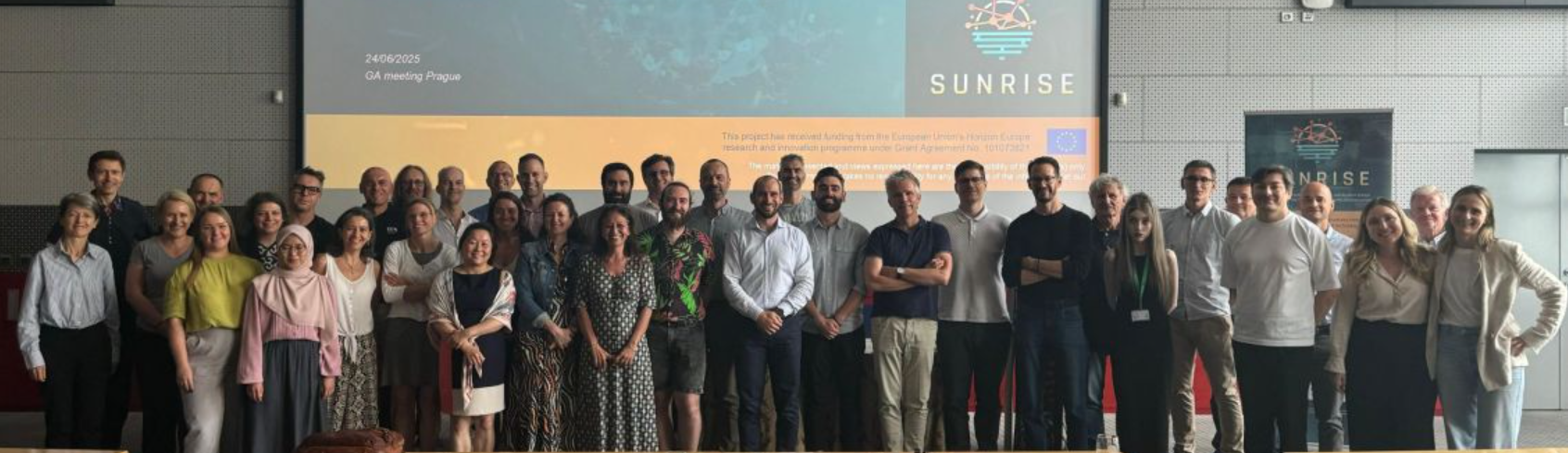
Beyond tools and reports, SUNRISE leaves a lasting legacy: a foundation for continued collaboration. It established a stable European working group on pandemic resilience for critical infrastructures, bringing together over 100 members to share best practices and strengthen preparedness for future crises. Importantly, the project also deepened understanding of operational challenges and highlighted where processes, tools, and communications can be improved.
The project showed that resilience is not built in isolation. It’s created through shared learning, practical innovation, and trust between operators, researchers, and policymakers. These lessons will continue to shape how Europe prepares for and responds to future unforeseen events.


